
Keynote Speakers

  • Home
  • >
  • Keynote Speakers
img

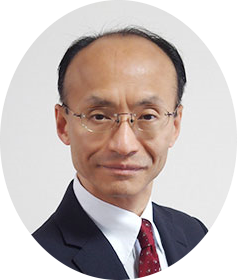
Makoto Usami

Kyoto University, Japan
Makoto Usami is Professor of Philosophy and Public Policy at Kyoto University and a visiting professor at the Technical University of Munich. Previously a visiting scholar at Harvard University, he held full professorships at Chukyo University and the Tokyo Institute of Technology (now Institute of Science Tokyo). Usami has served as President of the Public Policy Studies Association, Japan (PPSAJ), President of the International Association for Philosophy of Law and Social Philosophy, Japan (IVR Japan), and as a Director for both the Japanese Association of Legal Philosophy (JALP) and the Japanese Law and Economics Association (JLEA). Specializing in legal and political philosophy, his recent research focuses on climate, energy, and global justice, alongside the ethics of artificial intelligence. He has authored six books and edited nine anthologies as well as two special issues of an international journal. He has also published over 80 journal papers and book chapters, delivering lectures and presentations at more than 80 international conferences.


img

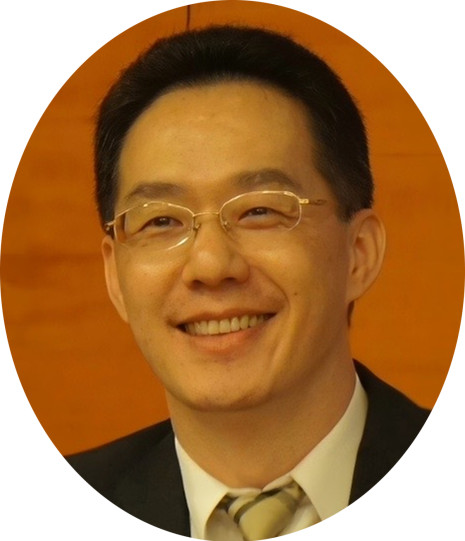
Wann-Ming Wey

National Taipei University, Taiwan, China

Wann-Ming Wey is Professor (Full & Distinguished) and was Dean, Department of Real Estate and Built Environment as well as International College of Sustainability Innovations (ICSI) at National Taipei University. His academic research interests include the Operations Research approach to urban studies, urban transportation planning, and the applications of the multi criteria evaluation with multiple objective programming and network analysis methods to the area of urban built environment planning and design. He held PhD of Civil and Environmental Engineering from University of California, Irvine in 1997 and was a recipient of the Transportation Research Board’s Fred Burggraff Award (1997), the University of California Transportation Center (UCTC) Research Awards (1995-1997) and Regent Fellowships of University of California (1994-1995), the 1998 and 2000 Distinguished Research Awards, the 2006 academic laureate of TIUP as well as the 2008-2010 Distinguished Young Scholar Award of the National Science and Technology Council (NSTC) of Taiwan, ROC. He is also currently appointed to a standing committee on Regional Science and Geography of the National Science and Technology Council (NSCT), Taiwan.

Speech title "A Study of Inclusive Equity Transit-Oriented Development under Climate Change: Integrating Urban Microclimate Improvement Strategies"

Abstract-Rapid urbanization, climate change, and intensified development around transit stations have created new challenges for equitable and sustainable urban planning, including heat accumulation, reduced environmental comfort, and unequal access to high-quality transit-oriented environments. This study addresses the need to integrate inclusive equity TOD with urban microclimate improvement strategies. A literature review was first conducted to identify evaluation criteria related to TOD, inclusive growth, spatial equity, climate adaptation, and urban microclimate. The Fuzzy Delphi Method was then applied to screen key indicators through expert consensus, followed by the Analytic Network Process (ANP) to determine the relative weights and interrelationships among the evaluation dimensions. The empirical study focuses on the area surrounding Lungshan Temple MRT Station in Wanhua District, Taipei City, where high transit accessibility, aging urban fabric, dense land use, and vulnerable populations coexist. The results identify the key planning factors influencing inclusive and climate-responsive TOD. The study concludes that TOD planning should balance accessibility, social inclusion, land-use efficiency, environmental comfort, and climate resilience to support a more equitable and sustainable urban future.
 

img

Kazuhisa Takemura

Waseda University, Japan

Kazuhisa Takemura is a Japanese behavioral decision theorist. Besides serving as a professor at the Department of Psychology, Waseda University, he is also the director of the University’s Center for Decision Research. He received his PhD (System Science) from Tokyo Institute of Technology in 1994, and an additional PhD (Medical Science) from Kitasato University in 2013. He has also worked abroad as a Fulbright Senior Researcher at the Department of Social and Decision Science, Carnegie Mellon University (USA) from 1999 to 2000 and a visiting professor at the Department of Psychology, St. Petersburg State University (Russia) in 2008, at Venice International University (Italy) in 2015. His main research area is human judgment and decision-making, especially the mathematical modeling of preferential judgment and choice. He received a Hayashi Award (Distinguished Scholar) from the Behaviormetric Society (in 2002), an Excellent Paper Award from Japan Society of Kansei Engineering in 2003, BookAwards from the Japanese Society of Social Psychology (in 2010) and the Behaviormetric Society (in 2016), a Fellow Award from the International Association of Applied Psychology (in 2018), and Kimura Award, Transdisciplinary Federation of Science and Technology (in 2021), Outstanding User Modeling Paper Award from Association for the Advancement of Artificial Intelligence (in 2023), and Award for Science and Technology (Research Category), The Commendation for Science and Technology by the Minister of Education, Culture, Sports, Science and Technology (in 2024). Throughout his career, he has taught behavioral decision theory at many universities and has published numerous books with major publishers, including Oxford University Press, Academic Press, and Springer Nature.

Speech title "Individual and Social Decision Making under Value Pluralism"

Abstract—Contemporary societies are characterized by increasing diversity in the values people consider important, including freedom, fairness, safety, efficiency, environmental sustainability, and self realization. Consequently, different value judgments may arise concerning the same social issues, making social consensus difficult to achieve. During the COVID-19 pandemic, for example, societies faced difficult trade-offs among infection prevention, public safety, economic activity, and individual freedom. Similar conflicts arise in healthcare and public policy, where safety, autonomy, fairness, efficiency, freedom, and the interests of future generations may not be easily reconciled. How such conflicts arising from value pluralism can be coordinated is therefore a fundamental challenge for contemporary society. Behavioral decision theory has accumulated extensive knowledge concerning how individuals consider and integrate multiple attributes and values in decision making. Drawing on theoretical perspectives on individual multi-attribute decision making (Takemura, 2021; Takemura et al., 2025, 2026), this presentation examines decision strategies from the perspectives of cognitive effort, choice accuracy, consistency, and Pareto optimality. It then considers how insights from individual decision making may inform social decision making and the aggregation of heterogeneous values. The presentation discusses theoretical implications for developing mechanisms of value aggregation that can accommodate diverse values while facilitating collective decisions in pluralistic societies.